Showing posts with label Fable. Show all posts

Friday, November 4, 2011

The God Principle


The source of this inspiring story from India is shrouded in antiquity.
Origins unknown.

(In the olden days when there were no motor 
cars, people used to travel on horseback.)

One rich man owned 19 horses when he died. In his final will and testament he had written that upon his death, half the horses he owned should go to his only son; one fourth to the village temple, and one fifth to the faithful servant.

The village elders could not stop scratching their heads. How could they give half of the 19 horses to the son? You cannot cut up a horse. They puzzled over this dilemma for more than two weeks and then decided to send for a wise man who was living in a neighbouring village.

The wise man came riding on his horse and asked the villagers if he could be of any help to them. The village elders told him about the rich man's last will and testament which stated that half of the (19) horses must be given to his only son, one fourth must go to the temple and one fifth to the faithful servant.

The wise man said he would immediately solve their problem. He had the 19 horses placed in a row standing next to one another. Then he added his own horse as the 20th horse. Now he went about giving half of the 20 horses – that is ten horses to the son. One fourth of 20- that is 5 horses were given to the temple committee. One fifth of twenty- that is 4 horses were given to the faithful servant. Ten plus five plus four made 19 horses. The remaining 20th horse was his own which he promptly mounted, spoke a few inspiring words, and rode back home.

The villagers were simply dumfounded, full of disbelief and filled with admiration. And the parting words of the wise man were inscribed in their hearts and minds which they greatly cherished and passed on to their succeeding generations till today.

The wise man said: In our daily lives, in our daily affairs, simply add God’s name and then go about facing the day’s happenings. Ever come across problems in life that are seemingly insurmountable? (Like the villagers, do we feel that such problems cannot be solved?).

The wise man continued: Add the God Principle in our daily lives and the problems will become lighter and eventually will disappear. In the manner of the ice which, with the addition of the heat principle will turn into water, and that will eventually evaporate as steam and disappear. And how do we add God’s name (God principle) in our daily lives? Through prayers, filled with true love and devotion with sincerity of purpose and dedication that only total faith can bring about. Meditation is a powerful means of directing the mind Godward.

But without true love and devotion entering into it, it remains like a boat without water. It is not difficult to push a boat that is floating in water, but extremely hard to drag the same boat on dry land. In the same way, if our life’s boat floats on the waters of true love and devotion, we can sail easily in it. The principle of love of God and devotion with total faith, (like water) makes easy the voyage of our lives. When the mind is pure and the heart full of simplicity and holiness, such a devotee becomes an instrument in the service of the Lord.
Friday, July 1, 2011

Dont Listen To The Crowd!

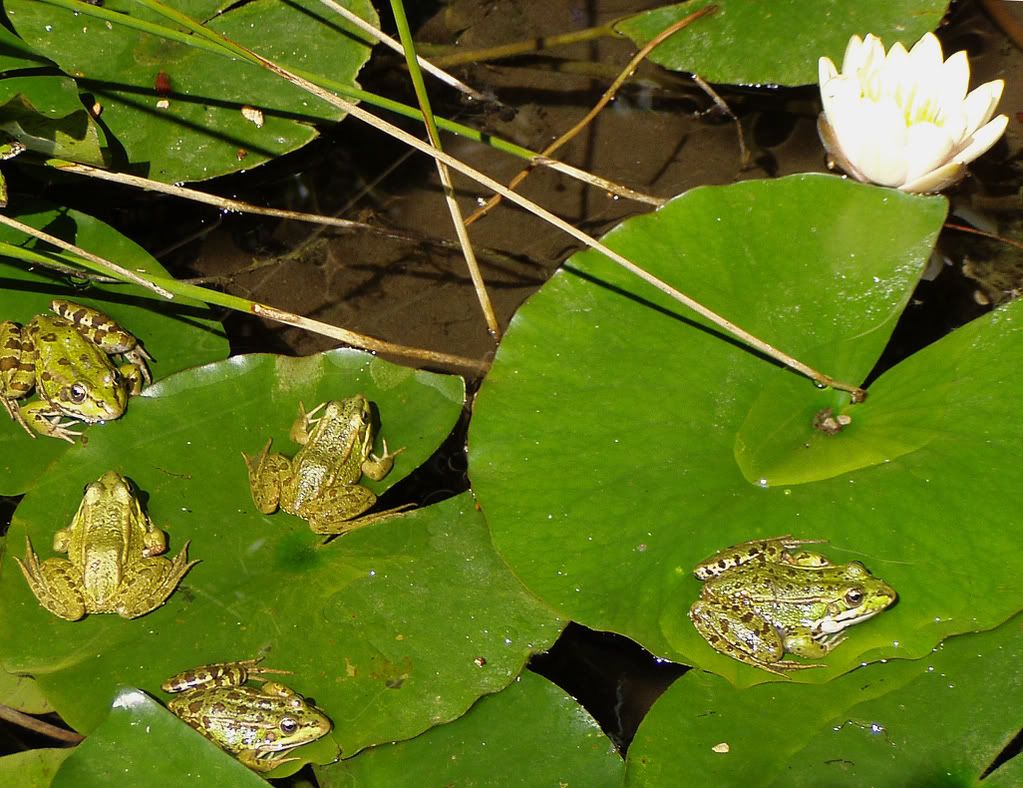
There once was a bunch of tiny frogs...who arranged a competition. The goal was to reach the top of a very high tower. A big crowd had gathered around the tower to see the race and cheer on the contestants.

The race began...

Honestly, no-one in crowd really believed that the tiny frogs would reach the top of the tower. You heard statements such as:

"Oh, WAY too difficult!!"
"They will NEVER make it to the top".
"Not a chance that they will succeed. The tower is too high!"
The tiny frogs began collapsing. One by one...

... Except for those who in a fresh tempo were climbing higher and higher...
The crowd continued to yell
"It is too difficult!!! No one will make it!"
More tiny frogs got tired and gave up...
...But ONE continued higher and higher and higher...

This one wouldn't give up!
At the end, everyone else had given up climbing the tower. Except for the one tiny frog who, after a big effort, was the only one who reached the top!

THEN all of the other tiny frogs naturally wanted to know how this one frog managed to do it?

A contestant asked the tiny frog how the one who succeeded had found the strength to reach the goal?

It turned out...

That the winner was deaf. 

Heaven & Hell

A woman who had worked all her life to bring about good was granted one wish: "Before I die let me visit both hell and heaven." Her wish was granted.

She was whisked off to a great banqueting hall. The tables were piled high with delicious food and drink. Around the tables sat miserable, starving people as wretched as could be. "Why are they like this?" she asked the angel who accompanied her. "Look at their arms," the angel replied. She looked and saw that attached to the people's arms were long chopsticks secured above the elbow. Unable to bend their elbows, the people aimed the chopsticks at the food, missed every time and sat hungry, frustrated and miserable. "Indeed this is hell! Take me away from here!"

She was then whisked off to heaven. Again she found herself in a great banqueting hall with tables piled high. Around the tables sat people laughing, contented, joyful. "No chopsticks I suppose," she said. "Oh yes there are. Look - just as in hell they are long and attached above the elbow but look... here people have learnt to feed one another.

Good luck? Bad luck? Who knows?

There is a Chinese story of an old farmer who had an old horse for tilling his fields. One day the horse escaped into the hills and, when all the farmer's neighbours sympathized with the old man over his bad luck, the farmer replied, 'Bad luck? Good luck? Who knows?'

A week later the horse returned with a herd of wild horses from the hills and this time the neighbors congratulated the farmer on his good luck. His reply was, 'Good luck? Bad luck? Who knows?'

Then, when the farmer's son was attempted to tame one of the wild horses, he fell off its back and broke his leg. Everyone thought this very bad luck. Not the farmer, whose only reaction was, 'Bad luck? Good luck? Who knows?'

Some weeks later the army marched into the village and conscripted every able-bodied youth they found there. When they saw the farmer's son with his broken leg they let him off. Now was that good luck? Bad luck? Who knows?

Choose Meaningful Goals!

A farmer had a dog who used to sit by the roadside waiting for vehicles to come around. As soon as one came he would run down the road, barking and trying to overtake it.

One day a neighbor asked the farmer "Do you think your dog is ever going to catch a car?"

The farmer replied, "That is not what bothers me. What bothers me is what he would do if he ever caught one." 


Many people in life behave like that dog who is pursuing meaningless goals.

To live a meaningful life, choose meaningful goals!

Focus is the Eye of Discipline

An ancient Indian sage was teaching his disciples the art of archery. He put a wooden bird as the target and asked them to aim at the eye of the bird. The first disciple was asked to describe what he saw. He said, "I see the trees, the branches, the leaves, the sky, the bird and its eye."


The sage asked this disciple to wait. Then he asked the second disciple the same question and he replied, "I only see the eye of the bird." The sage said, "Very good, then shoot." The arrow went straight and hit the eye of the bird.

Unless we focus, we cannot achieve our goal. It is hard to focus and concentrate, but it is a skill that can be learnt.

The Little Girl

A little girl lived in a small, very simple, poor house on a hill -  and as she grew she would play in the small garden - and as she grew she was able to see over the garden fence and across the valley to a wonderful house high on the hill. This house had golden windows, so golden and shining that the little girl would dream of how magic it would be to grow up and live in a house with golden windows instead of an ordinary house like hers.

And although she loved her parents and her family, she yearned to live in such a beautiful golden house, and dreamed all day about how wonderful and exciting it must feel to live there. 

When she reached an age where she gained enough skill and sensibility to go outside her garden fence, she asked her mother is she could go for a bike ride outside the gate and down the lane. After much, the little girl's mother finally allowed her to go, insisting that she kept close to the house and didn't wander too far. The day was beautiful and the little girl knew exactly where she was heading! Down the lane and across the valley, she rode her bike until she got to the gate of the golden house across on the other hill.

As she dismounted her bike and leaned it against the gate-post, she focused on the path that lead to the house and then on the house itself...and was so disappointed as she realized all the windows were plain and rather dirty, reflecting nothing other than the sad neglect of the house that stood derelict.

Heart-broken, she didn't go any further and turned to remount her bike. As she glanced up she saw an amazing sight - there across the way on her side of the valley was a little house and its windows glistened golden, as the sun shone on her own little home.

MORAL: She realized that she had been living in her golden house and that all the love and care she found there was what made her home the 'golden house'. Everything she dreamed was right there in front of her all along!

Thursday, June 30, 2011

The Seeker

After years of searching, the Seeker was told to go to a cave, in which he would find a well. 'Ask the well what is truth', he was advised, 'and the well will reveal it to you'. Having found the well, the Seeker asked that most fundamental question. And from the depths came the answer, 'Go to the village crossroad: there you shall find what you are seeking'.

Full of hope and anticipation the man ran to the crossroad to find only three rather uninteresting shops. One shop was selling pieces of metal, another sold wood, and thin wires were for sale in the third. Nothing and no one there seemed to have much to do with the revelation of truth.

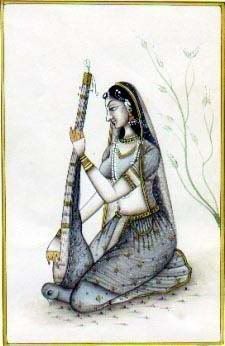
Disappointed, the Seeker returned to the well to demand an explanation, but he was told only, 'You will understand in the future.' When the man protested, all he got in return were the echoes of his own shouts. Indignant for having been made a fool of - or so he thought at the time - the Seeker continued his wanderings in search of truth. As years went by, the memory of his experience at the well gradually faded until one night, while he was walking in the moonlight, the sound of sitar music caught his attention. It was wonderful music and it was played with great mastery and inspiration. 

Profoundly moved, the truth seeker felt drawn towards the player. He looked at the fingers dancing over the strings. He became aware of the sitar itself. And then suddenly he exploded in a cry of joyous recognition: the sitar was made out of wires and pieces of metal and wood just like those he had once seen in the three stores and had thought it to be without any particular significance.

At last he understood the message of the well: we have already been given everything we need: our task is to assemble and use it in the appropriate way. Nothing is meaningful so long as we perceive only separate fragments. But as soon as the fragments come together into a synthesis, a new entity emerges, whose nature we could not have foreseen by considering the fragments alone.

If Only I'd Been Born an Eagle

Once a farmer found an abandoned eagle's nest and in it was an egg that was still warm. He took the egg back to his farm and laid it in the nest of one of his hens. The egg hatched and the baby eagle grew up along with the other chickens. It pecked about the farmyard, scrabbling for grain. It spent its life within the yard and rarely looked up. When it was very old, one day it lifted up its head and saw above it a wonderful sight - an eagle soaring high above in the sky. Looking at it, the old creature sighed and said to itself, "If only I'd been born an eagle".


MORAL: WHO WE THINK WE ARE CREATES WHAT WE ARE

A person is a person because of another person

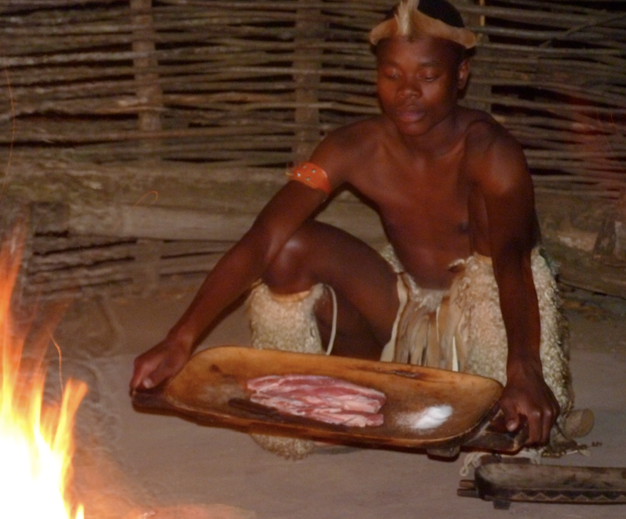
Of the many interactions I had with my mother those many years ago, one stands out with clarity. I remember the occasion when mother sent me to the main road, about twenty yards away from the homestead, to invite a passing group of seasonal work-seekers home for a meal. She instructed me to take a container along and collect dry cow dung for making a fire. I was then to prepare the meal for the group of work-seekers.

The thought of making an open fire outside at midday, cooking in a large three-legged pot in that intense heat, was sufficient to upset even an angel. I did not manage to conceal my feelings from my mother and, after serving the group, she called me to the veranda where she usually sat to attend to her sewing and knitting.

Looking straight into my eyes, she daid "Tsholofelo, why did you sulk when I requested you to prepare a meal for those poor destitute people?" Despite my attempt to deny her allegation, and using the heat of the fire and the sun as an excuse for my alleged behaviour, mother, giving me a firm look, said ""Lonao ga lo na nko" - "A foot has no nose". It means: you cannot detect what trouble may lie ahead of you.

MORAL: Had I denied this group of people a meal, it may have happened that, in my travels some time in the future, I found myself at the mercy of those very individuals. As if that was not enough to shame me, mother continued: "Motho ke motho ka motho yo mongwe". The literal meaning: "A person is a person because of another person."

Truth Goodness & Usefulness

In ancient Greece, Socrates was reputed to hold knowledge in high esteem. One day an acquaintance met the great philosopher and asked him, “Do you know what I just heard about your friend?”

“Hold on a minute,” Socrates replied. “Before telling me anything I’d like you to pass a little test. It’s called the Triple Filter Test.”

“Triple filter?” asked the acquaintance.

“That’s right,” Socrates continued. “Before you talk to me about my friend, it might be a good idea to take a moment and filter what you’re going to say. That’s why I call it the triple filter test. The first filter is Truth. Have you made absolutely sure that what you are about to tell me is true?”

“No,” the man said, “Actually I just heard about it and ...”

“All right,” said Socrates. “So you don’t really know if it’s true or not. Now let’s try the second filter, the filter of Goodness. Is what you are about to tell me about my friend something good?”

“No, on the contrary…”

“So,” Socrates continued, “you want to tell me something bad about him, but you’re not certain it’s true. You may still pass the test though, because there’s one filter left: the filter of Usefulness. Is what you want to tell me about my friend going to be useful to me?”

“No, not really …”

“Well,” concluded Socrates, “if what you want to tell me is neither true nor good nor even useful, why tell it to me at all?”


MORAL: THINK TWICE BEFORE YOU SPEAK

The Sage of Corith

When Alexander the Great appeared before the Greek leaders in Corinth, they greeted him warmly and paid him lavish compliments - all of them, that is, but one. He was a funny fellow, a philosopher, named Diogenes. He had views not unlike those of the Buddha. According to him, possessions and all the things we think we need, only serve to distract us and get in the way of our simple enjoyment of life. So he had given away everything he owned and now sat, almost naked, in a barrel in the market square in Corinth where he lived, free and independent like a stray dog.

Alexander The Great
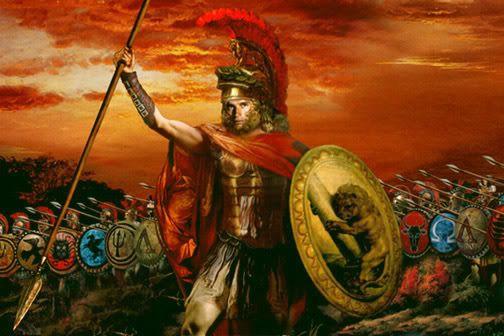
Curious to meet this strange fellow, Alexander went to call on him. Dressed in shining armour, the plume on his helmet waving in the breeze, he walked up to the barrel and said to Diogenes, "I like you. Let me know your wish and I shall grant it." Diogenes, who had until then been comfortably sunning himself, replied, "Indeed, Sire, I do have a wish." "Well, what is it?" asked Alexander. "Your shadow has fallen over me: stand a little less between me and the sun," replied Diogenes.


Alexander was so struck by this that he famously said, "If I weren't Alexander, I should like to be Diogenes." He realized that Diogenes simple philosophy on life led to his simple contentedness.

Nothing is Futile

Once upon a time a man was walking along a beach. The sun was shining and it was a beautiful day. Off in the distance he could see a person going back and forth between the surf's edge and and the beach. Back and forth this person went. As the man approached, he could see that there were hundreds of starfish stranded on the sand as the result of the natural action of the tide.

The man was stuck by the the apparent futility of the task. There were far too many starfish. Many of them were sure to perish. As he approached, he saw the person continued the task of picking up starfish one by one and throw them into the surf. 

He walked up to the person and said: "You must be crazy. There are thousands of miles of beach covered with starfish. You can't possibly make a difference." The person looked at the man. He then stooped down and picked up one more starfish and threw it back into the ocean. He turned back to the man and said: "It sure made a difference to that one!"


MORAL: WE HAVE ALL BEEN GIFTED WITH THE ABILITY TO ACT TO MAKE A DIFFERENCE.

Peace of Mind

Once Buddha was walking from one town to another town with a few of his followers. This was in his early days of renunciation. While they were travelling, they happened to pass a lake. They stopped there and Buddha said to one of his disciples, “I am thirsty. Do get me some water from that lake there.”


The disciple walked up to the lake. When he reached it, he noticed that some people were washing clothes in the water and, right at that moment, a bullock cart started crossing through the lake. As a result, the water became very muddy and dirty. The disciple thought, “How can I give this muddy water to Buddha to drink!” So he came back and told Buddha, “The water in there is very muddy. I don’t think it is fit to drink.”

After about half an hour Buddha asked the same disciple to go back to the lake and get him some water to drink. The disciple obediently went back to the lake. This time he found that the lake had absolutely clear water in it. The mud had settled down and the water above it looked fit to be drunk. So he collected some water in a pot and brought it to Buddha.

Buddha looked at the water, and then he looked up at the disciple and said, “See what you did to make the water clean. You let it be ... and the mud settled down on its own – and you got clear water... Your mind is also like that. When it is disturbed, just let it be. Give it a little time. It will settle down on its own. You don’t have to put in any effort to calm it down. It will happen. It is effortless.”

What did Buddha emphasize here? He said, “It is effortless.” Having 'peace of mind' is not a strenuous job; it is an effortless process. 


MORAL: WHEN YOU ARE AT PEACE WITHIN YOURSELF, THAT SENSE OF PEACE SPREADS TO EVERYONE AND EVERYTHING AROUND YOU.

Thin Frog, Fat Frog!

This is the story of two frogs. One frog was fat and the other skinny. One day, while searching for food, they inadvertently jumped into a vat of milk. They couldn't get out, as the sides were too slippery, so they were just swimming around.

The fat frog said to the skinny frog, "Brother frog, there's no use paddling any longer. We're just going to drown, so we might as well give up." The skinny frog replied, "Hold on brother, keep paddling. Somebody will get us out." And they continued paddling for hours.

After a while, the fat frog said, "Brother frog, there's no use. I'm becoming very tired now. I'm just going to stop paddling and drown. It's Sunday and nobody's working. We're doomed. There's no possible way out of here." But the skinny frog said, "Keep trying. Keep paddling. Something will happen, keep paddling." Another couple of hours passed.


The fat frog said, "I can't go on any longer. There's no sense in doing it because we're going to drown anyway. What's the use?" And the fat frog stopped. He gave up. And he drowned in the milk. But the skinny frog kept on paddling.


Ten minutes later, the skinny frog felt something solid beneath his feet. He had churned the milk into butter and he hopped out of the vat.

MORAL: NEVER GIVE UP OR LOSE HOPE!